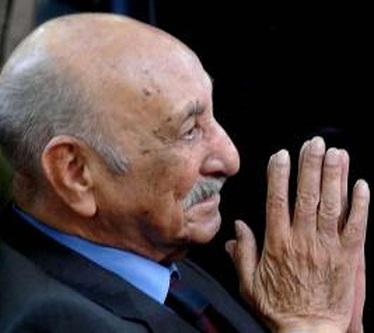
Nineteen years ago, on July 23, 2007 (1 Asad 1386 in the Afghan calendar), His Majesty King Mohammad Zahir Shah passed away in Kabul at the age of 93.
Mohammad Zahir Shah was born on October 15, 1914. He ascended the throne on November 8, 1933, following the assassination of his father, King Mohammad Nadir Shah. He ruled Afghanistan for nearly forty years until July 17, 1973 (26 Saratan 1352), when his cousin and former Prime Minister, Mohammad Daoud Khan, overthrew the monarchy in a coup while the King was in Italy.
Zahir Shah was the longest-reigning monarch in modern Afghan history since the establishment of the Afghan state in the eighteenth century. His reign is widely remembered as one of peace, political stability, and gradual modernization. During this period, Afghanistan remained free from war and steadily advanced in infrastructure, education, healthcare, and economic development.
Despite sharing a border with the Soviet Union, King Zahir Shah maintained friendly relations with countries across both East and West. Through a policy of neutrality during the Cold War, he successfully kept Afghanistan independent of the rivalry between the superpowers and prevented the country from falling under Soviet domination, even as the Soviet Union had extended its influence over many neighboring states.
During the 1950s and 1960s, he initiated a series of modernization reforms. The most significant of these was the introduction of a new Constitution in 1964, which established a constitutional monarchy, expanded civil liberties, guaranteed women’s right to vote, and laid the foundation for parliamentary democracy.
King Zahir Shah envisioned a constitutional system in which the monarch would serve primarily as a symbolic head of state, while executive authority would rest with an elected government led by a prime minister. He also sought to remove members of the royal family from executive positions. Many historians believe that this policy contributed to Mohammad Daoud Khan’s decision to stage the 1973 coup, as it effectively blocked his return to political power.
In 1973, while King Zahir Shah was in Italy undergoing eye surgery, Daoud Khan abolished the monarchy and declared Afghanistan a republic. Although he established a republican system, no national elections were held during his rule.
The coup ended Afghanistan’s 225-year-old monarchy and marked the beginning of decades of political instability and conflict, the consequences of which continue to affect the country more than fifty years later.
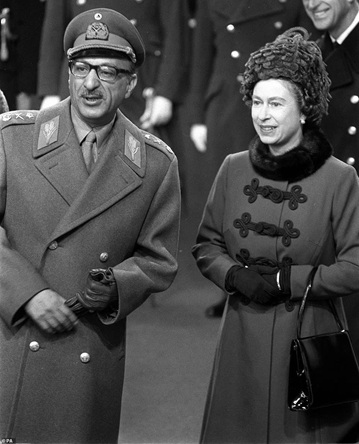
The Queen, stands alongside King Mohammed Zahir Shah of Afghanistan shortly after his arrival
King Zahir Shah remained in exile in Rome until 2002, when he returned to Afghanistan following the fall of the Taliban regime. Under the new Afghan Constitution, he was honored with the title “Father of the Nation.” He passed away in 2007.
Major Achievements During King Zahir Shah’s Reign
One of the greatest accomplishments of King Zahir Shah’s era was the 1964 Constitution, which established the foundations of constitutional governance, guaranteed women’s voting rights, and expanded freedom of expression.
During his reign (1933–1973), Afghanistan witnessed significant progress in infrastructure, education, healthcare, agriculture, and industry. Although some critics argue that more could have been achieved during nearly four decades of peace, historians generally regard this period as one of Afghanistan’s most stable and steadily developing eras.
Infrastructure and Transportation
- Construction of the Salang Tunnel and Salang Highway, connecting northern and southern Afghanistan.
- Completion of the Kabul–Kandahar Highway.
- Construction and improvement of the Kabul–Jalalabad Highway and other major national roads.
Dams and Electricity
- Expansion of the Kajaki Dam.
- Completion of the Arghandab Dam, providing irrigation and hydroelectric power.
- Construction of the Naghlu Hydroelectric Dam.
- Development of additional hydroelectric facilities in northern Afghanistan.
Agriculture and Irrigation
- Implementation of the Helmand Valley Development Project.
- Construction of the Boghra Canal and numerous irrigation canals.
- Thousands of hectares of previously barren land were converted into productive farmland.
Education
- Expansion of Kabul University.
- Establishment of Kabul Polytechnic University.
- Construction of dozens of schools and high schools throughout the provinces.
- Significant expansion of girls’ education, particularly in urban areas.
Healthcare
- Construction and expansion of public hospitals in Kabul and other provinces.
- Improvement of public healthcare services across much of the country.
Industry
- Development of the Gulbahar Textile Factory.
- Development of the Pul-e-Khumri Textile Factory.
- Construction and expansion of cement, sugar, fertilizer, and other state-owned industrial plants.
- Establishment of several state-owned industrial enterprises.
Urban Development
- Preparation of Kabul’s first comprehensive Master Plan.
- Construction of the Microrayan (Makroyan) residential complexes.
- Development of new government buildings, parks, and planned urban neighborhoods.
Constitutional and Political Reforms
- Promulgation of the 1964 Constitution.
- Establishment of an elected parliament and the emergence of a relatively free press during the period commonly known as the “Decade of Democracy.”
Overall Assessment
During King Zahir Shah’s reign, Afghanistan successfully maintained balanced relations with the United States, the Soviet Union, West Germany, and many other countries, enabling it to benefit from development assistance from both sides of the Cold War while preserving its independence. Numerous major infrastructure and development projects were completed during this period.
Nevertheless, much of this progress remained concentrated in urban centers. Rural Afghanistan continued to face widespread poverty, limited educational opportunities, and inadequate infrastructure. These economic and political challenges persisted and became more pronounced following the 1973 coup and the decades of instability that followed.
About the Author