Ehsan Azari Stanizai
Ehsan Azari Stanizai
Despite its crushing defeat and its patron, the Taliban regime in Afghanistan, in 2001, and the killing of its leader, Osama bin Laden, a decade later in a Pakistani garrison town on May 2, 2011, a quarter-century after the 9/11 terrorist attack on US soil, al-Qaida and its affiliated Islamic terrorists display signs of revival.
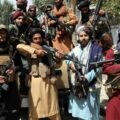
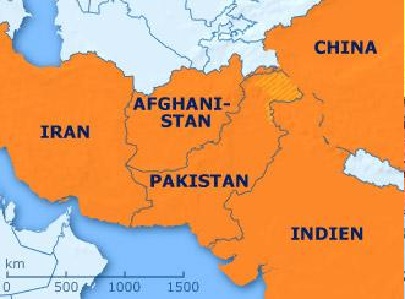
Al-Qaida and its consecration of target-killing and its anti-Western ideology were truly a new reincarnation of the cannabis-crazed cult of Assassins, which was active at the beginning of the 11th century AD in the mountain ranges of northwestern Iran and the coastal mountains of Syria. The endurance of al-Qaida and other Islamic terrorist outfits across the Islamic world owes much to the survival of the last two tyrannical theocracies in Afghanistan and Iran, which have provided ideological backing and played a major role in the restoration of Islamic extremist outfits across the Islamic countries. The Taliban regime for the past five years has yet to provide safe haven for al-Qaida and a variety of Islamic terrorist groups. The UN monitoring report of August 2026 confirms that al-Qaida and roughly 20 other extremist groups remain active in Taliban-controlled Afghanistan. Other relevant religious extremists in Pakistan, like Lashkar-e-Taiba and Lashkar-i-Jhangvi, are fighting to win Indian-controlled Kashmir for Pakistan. The mountainous areas of the tribal belt that divide Afghanistan and Pakistan still pose a growing global threat, with anti-Western sentiment as their ideological responsa prudentium.
Pakistan formally declared open war with Afghanistan for the Taliban’s support of terrorists in Pakistan. Pakistan’s continuing air attacks on Afghanistan and its apparent severe diplomatic antagonism in recent years are masking the bitter truth that Pakistan’s powerful military and ISI are still running the show inside Afghanistan. Shortly after the Taliban took over in Afghanistan in September 2001, the ex-chief of the ISI, General Faiz Hamid, was famously photographed with a fellow Pakistani diplomat holding a teacup at the Serena Hotel in Kabul. According to Afghan sources, he successfully cherry-picked the Taliban cabinet members.
Afghan independent sources advocate the truth that the Taliban’s Amir, Mullah Habatullah, who has never been seen in public, and his close circle have strong relations with the Pakistani military’s upper echelon. The mysterious Amir evokes Salvador Dali’s 1936 painting, An Invisible Afghan with Apparition, whose insane misogynist policies have practically deprived more than 22 million Afghan girls and women of education and work. If this policy continues, Afghanistan will be the only country on earth having generations of women and girls in utter ignorance.
Over two decades of the US-led Western anti-terror war toppled the Taliban regime in 2001. The United States had reportedly spent $2 trillion on the war effort and lost 2,400 American troops, and nearly 700 troops from other nations in the coalition.
Under the patronage of the Pakistani military and its infamous Inter-Services Intelligence (ISI), the defeated leaders of the Taliban fled to Pakistan and continued to fight in Afghanistan to revive the Taliban. However, the Pakistani military’s double-dealing provided logistical, training, and financial support for the Taliban militants while receiving billions of American dollars for supposedly helping the US in its war on terrorism. Even as Pakistan lost control over some ruling Taliban factions in Afghanistan, as reported by the Financial Times on March 2, 2026, quoting a Pakistani special envoy for Afghanistan until late 2024, “Pakistan has got a fair amount of assets inside Afghanistan. The details are up to the leadership.”
This obsession with controlling Afghanistan as a safeguard for Pakistan reveals a dangerous geopolitical strategy that jeopardises every effort to eradicate Islamic terrorism in the region and beyond. Furthermore, Pakistan exploits the ongoing bonhomie between President Trump and Pakistan’s de facto military ruler, Asim Munir—the US president’s “favourite field marshal”—as a cover for its covert meddling in neighbouring countries.
My fear (I hope I am mistaken) is that the Pakistani military may have manipulated the Taliban leader and his cronies as a catalyst for another major terrorist operation by remnants of al-Qaida-linked violent groups along the disputed border between Afghanistan and Pakistan. Such a scenario would definitely allow the Pakistani military to drag US armed forces back into Afghanistan’s quagmire.
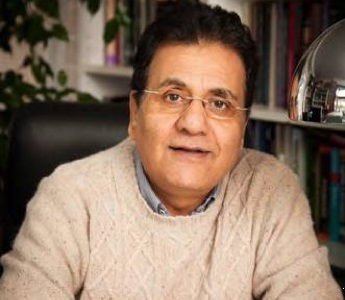
Dr Ehsan Azari Stanizai is director of the Sydney Lacan Study and Reading Network.
About the Author