Ehsan Azari Stanizai
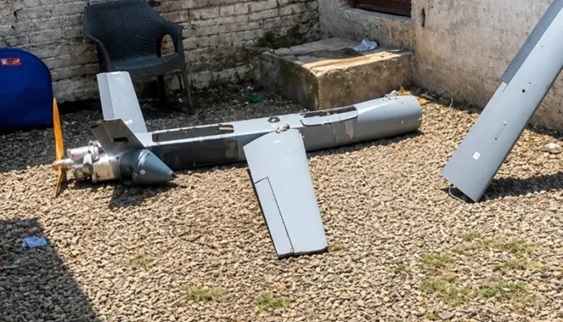
On Saturday evening, October 11, 2025, Pakistan carried out an unprecedented airstrike on the Afghan capital, Kabul, aiming to target a leader of TTP (Tahrik-e-Taliban Pakistan), formerly seen by Pakistan as ‘good Taliban’ proxy militants. The attack ignited a fierce retaliatory cross-border skirmish by the Taliban along the disputed Durand Line, which divides the two neighbouring countries, resulting in scores of fatalities on both sides. Pakistan is hoping that by using its renewed ties with the US, it will succeed in dragging the US back to the Afghan theatre of war to restrain the rising internal insurgency.
Mediated by Qatar and Turkey, both sides mutually agreed to an immediate ceasefire in Doha. However, the third round of the peace negotiations in Istanbul collapsed. Both sides, guns a-blazing, resumed exchanging fire for a single day last week.
Given a rollercoaster relationship between the Pakistani military and the Taliban since the latter regained control of Kabul in 2021, neither side appears to maintain the ceasefire afloat for long.
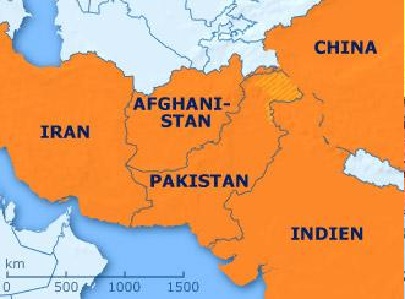
The underlying root cause of the strained relations between Afghanistan and Pakistan stems from the 2,670-kilometre Durand Line, which was drawn during British India, cutting off heartlessly Pashtun communities, villages, cemeteries and mosques. Since its creation in 1947, Pakistan has maintained that it inherited the Portugal-sized Pashtun tribal belt from the British Raj, viewing the Durand line as an immutable border. However, Afghanistan contests the legitimacy of the de facto border. Each subsequent Afghan government, including the Taliban, has refrained from acknowledging the legitimacy of the Durand line. The mere mention of a border with Pakistan evokes a deep emotional response within the Afghan psyche. During the negotiation leading up to the ceasefire, the tense atmosphere was so palpable that, according to the Taliban’s persistence, the Qatari foreign office removed the term ‘border’ from the text of the truce.
Following an agreement with the protectorate king of Afghanistan, Amir Abdul Rahman Khan, the Foreign Secretary of British India, Sir Mortimer Durand, delineated the boundary between Afghanistan and British India in 1893. The primary objective of drawing the Durand line was not to create a border between the two sovereign nations, but rather to determine the administrative boundaries between the Afghan king and the British Raj. “The Durand Line was an agreement to define the respective spheres of influence of the British government and the Amir (Abdul Rahman). Its object was to preserve and to obtain the Amir’s acceptance of the status quo,” the Viceroy, Lord Elgin, wrote in 1896. Similarly, according to his biographer, Percy Sykes, Durand himself acknowledged during negotiations with Amir in The Right Sir Mortimer Durand, that the British Empire intended to bring areas of Afghanistan under its political control. He clarified, “The tribes on the Indian side are not to be considered as within British territory. They are simply under our influence in the technical sense of the term, that is to say, so far as the Amir is concerned and as far as they submit to our influence or we exert it.”
The geopolitical significance of the Durand Line has been widely acknowledged globally. As Lord Cuzon, the former British Viceroy, aptly noted in 1907, “‘the razor’s edge [Durand line] on which hang suspended the modern issues of war or peace, of life or death of nations.” This longstanding border dispute has never been as explosive as it is today. The shifting geopolitical dynamics in South and Central Asia pose the risk of a full-blown war between Afghanistan and Pakistan at any moment. This geopolitical fault-line has engendered perpetual tensions regarding territorial entitlements, border conflicts and the infiltration of Islamic terrorists and religious militants, such as TTP, across the border.
It is undeniable that the Durand Line’s legitimacy has always been precarious, explaining Pakistan’s strategy of playing a double game over the past decades. While aligning with the United States’ anti-terror coalition in Afghanistan to receive aid in billions of dollars, the Pakistani military played footsie with different brands of Islamist militants, utilising them for both domestic security and geopolitical objectives. Consequently, the Taliban’s resurgence was met with great fanfare in Islamabad as a Pakistani strategic triumph. However, the Pakistan Taliban scheme soon deteriorated into a Frankenstein when the Taliban turned against their former handlers. It is not surprising that Pakistan designates the Taliban as Indian proxies.
After the Taliban’s return to power on August 15, 2021, the former chief of Pakistan’s infamous military intelligence (ISI), Faiz Hameed, hurried to Kabul on September 4, 2021, and actively participated in the formation of the Taliban leadership structure and their newly established cabinet. Several Pakistani agents were strategically placed within the Taliban government. According to the Afghan sources, the most influential proxy in Afghanistan is the mysterious anti-Western Amir of the Taliban, Hibatullah Akhundzada, who maintains strong connections with the ISI. His most egregious decrees for establishing his oppressive dystopia in Afghanistan have inadvertently served Pakistan’s objectives: a weak, unstable, and internationally unrecognised Afghanistan. Over the past four years, he has consistently employed religion as an all-purpose tool to tighten his unbridled control over power. Afghan girls and women, who are denied access to education and employment, have become the tragic victims of his barbaric misogynist policies.
In the meantime, each decree he has issued has been terrifying, revealing the depth of his profound ignorance and tyrannical fixation: “All Afghans must submit to me as if they were lifeless bodies”; “A woman’s face and the sound of her voice are prohibited from being seen or heard in public”; “All books authored by women must be removed from universities,” to name but a few. Throughout his four years of rule, he has never made a public appearance. No independent and respected Afghan has ever encountered or met him. On rare occasions when he does appear in public, he wears dark glasses and a wrap to conceal his face. His social invisibility has perplexed both Afghans and outsiders alike. Afghans are divided over the identity of the Amir, much as Russians were over the identity of false Dmitry, the youngest son of Ivan the Terrible, during the sixteenth century.
In the Afghan social media landscape, interpretations of Hibatullah Akhundzada’s ghostly figure vary widely. While some contend that he may not be the original Habatullah due to his alleged death alongside his brother in a suicide blast in Quetta before 2021, there are even speculations suggesting that he could be a covert “ISI officer”. In contrast, the Pakistani media portrays him in a positive light. For instance, The Express Tribune, a newspaper closely aligned with the Pakistani military, reported on August 29, 2025, that “Venerated Moulvi Haibatullah [sic] Akhundzada is showing frustrations and signs of discontent and is divided on key issues like relations with Pakistan and the TTP…” The Pakistani military is keeping Taliban Amir and his inner circle for its last gasp goal in Afghanistan.
Facing an unyielding insurgency in Khyber Pakhtunkhwa and Baluchistan, Field Marshal Asim Munir, the all-powerful Pakistani military chief, sought to regain the favour of the United States. President Trump extended an invitation to a White House lunch on June 18, 2025. Munir’s objective is to pull the US back into the Afghan quagmire, potentially alleviating the mounting burden of Islamist terrorists and separatists, whose casualties on the Pakistani army and security forces continue to escalate. The US move could be viewed as another mistake in re-entering a conflict that, by definition, is a war for which the ruling Pakistani military has no one to blame. In the face of the escalating conflict with Afghanistan, the army chief is heading down Actaeon’s path
Dr Ehsan Aaari Stanizai is an academic at the University of Western Sydney. He is also the director of the Sydney Lacan Study and Reading Network.
About the Author