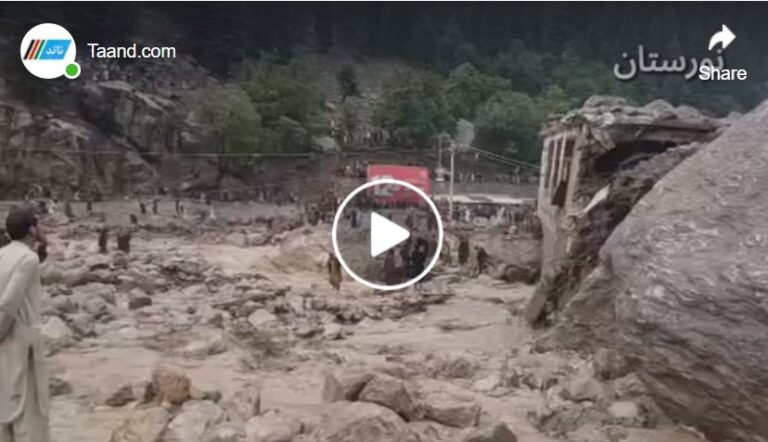
UN chief extends condolences to victims of Afghanistan quake, says “will spare no effort” to assist
The quake, near the border with Pakistan, injured more than 2,500 people, the authorities said. The death toll was expected to rise.
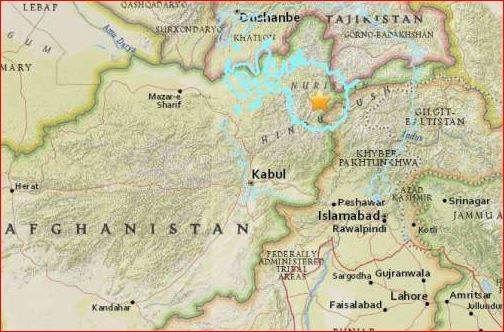
Rescue workers on Monday scrambled to reach mountainous areas in eastern Afghanistan hit by a 6.0-magnitude earthquake rocked the mountainous areas of eastern Afghanistan on Sunday night, Afghan officials said on Monday. The death toll would probably rise, Afghan officials have said, as landslides stranded devastated villages hardly accessible by road and a handful of countries offered relief assistance to the Taliban administration.
Most of the destruction took place in the province of Kunar, where dozens of villages with mud and brick houses were hit.
“The area is very steep and narrow and most of it is inaccessible because of landslides and rains that fell over the past few days,” said Kate Carey, a Kabul-based officer with the United Nations’ Office for humanitarian affairs.
The quake hit Afghanistan as the South Asiis the latest in a series of overlapping crises for Afghanistan. Hundreds of hospitals and health care centers have been forced to shut down since the Trump administration suspended U.S. foreign aid earlier this year. More than 2.3 million Afghan nationals have returned to the country, in some cases by force, after being expelled from Pakistan or Iran amid a wave of xenophobia and political pressure in those countries.
The quake was a shallow one, just five miles from the earth’s surface, which made it likelier to be more destructive, as shallower waves retain more of their power when hitting the surface. Less than 100 miles away, residents of Kabul, Afghanistan’s capital, felt the aftershocks across the city throughout the night, but no major damage was reported.
Road access was difficult for rescue workers in the area’s steep terrain, where landslides had struck. Homa Nader, the acting head of the International Federation of the Red Cross and Red Crescent in Afghanistan, said it took Red Cross teams from Jalalabad four hours overnight to reach the most affected area, in Nur Gal district, just 35 miles away. By Monday afternoon, the road linking Jalalabad, one of Afghanistan’s largest cities, to Kunar Province had reopened, and a steady stream of ambulances were rushing to the impacted areas while on the other side, dozens were ferrying victims back to Jalalabad.
Hospitals were operational in both Kunar and Nangarhar with no significant damage, Ms. Nader said, while health centers in three districts of Kunar reported minor structural damages. One village, Mazar Dara, was completely blocked and victims could only be carried out by helicopter, she said in a text message.
Zabiullah Mujahid, the Taliban’s chief spokesman, told a news conference in Kabul on Monday that said 800 people had been killed and 2,500 injured in Kunar Province alone. In Nangarhar Province, he said, at least 12 people were killed and 255 were injured.
Earthquakes are a prevalent danger in Afghanistan and other countries in the region, where many people live on or near geological faults. In 2022, a 5.9-magnitude quake that struck a remote area of Afghanistan’s southeast killed at least 1,300 people, according to the United Nations. The Taliban, who have ruled Afghanistan since 2021, said at the time that more than 4,000 people had died.
The quake is the latest in a series of overlapping crises for Afghanistan. Hundreds of hospitals and health care centers have been forced to shut down since the Trump administration suspended U.S. foreign aid earlier this year. More than 2.3 million Afghan nationals have returned to the country, in some cases by force, after being expelled from Pakistan or Iran amid a wave of xenophobia and political pressure in those countries.
More are scheduled to arrive in the coming days. The earthquake hit while many Afghans living in Pakistan were on their way to Afghanistan, ahead of a Monday deadline set by the Pakistani government for all of them to leave or face arrest and deportation.
One of those Afghans, Said Meer, had planned to arrive in Jalalabad on Monday with his two wives and 12 children, a day after leaving Lahore, the city in eastern Pakistan where he was born and had spent his whole life. He was hoping to transfer his livestock business to Jalalabad.
About the Author