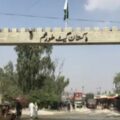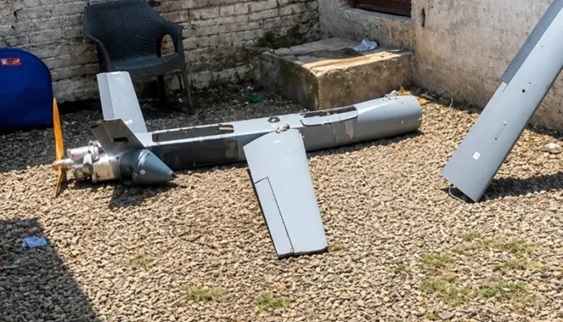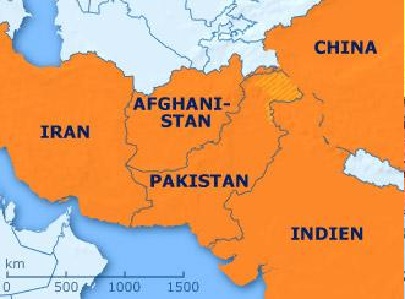
This month saw deadly cross-border attacks between Afghanistan and Pakistan. The Pakistani air force also bombed Kabul, and southeastern Afghanistan.
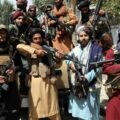
Pakistan stated that it was responding to an attack by the Tehreek e Taliban (TTP), in its Khyber Pakhtunkhwa province and that it wants to stop the “menace of terrorism emanating from Afghan soil towards Pakistan.”
The Taliban government denies harbouring the TTP, and for now, a ceasefire mediated by Turkey and Qatar is in effect.
Nevertheless, it is difficult to take Pakistan’s outrage seriously. This is not, because the TTP hasn’t carried out its own violent attacks in Pakistan. It has. In fact, attacks have surged since the Taliban 2.0 returned to power in Kabul in August 2021.
But Pakistan’s outrage rings hollow when, since October 2023, it has enacted an ugly racist mass expulsion programme against its own Afghan refugee population. Upending the lives of millions and engaging in systematic mass human rights violations—from sexual assault to arbitrary detention and forced removal.
The Pakistani establishment’s concerns appear somewhat disingenuous given it fostered the longer-term conditions that gave rise to the TTP. Pakistan has a well-documented and long history of patronising and empowering the Afghan Taliban.
It was a key broker of the 2020 Doha Peace Deal between the Taliban and the US, which paved the way for the group’s return to power. When the Taliban took back control, out of fear, many Afghans fled the country (again) or went into hiding. However, many Pakistani establishment supporters celebrated. “Their guys” were in.
The breakdown in relations between Pakistan and Afghanistan is clearly not just about TTP violence. Islamabad is also uneasy about the Afghan Taliban acting as a sovereign power rather than toeing its line. Especially as is seems to be pursuing closer relations with India. Just last week the Afghan Foreign Minister Amir Khan Muttaqi visited Pakistan’s nemesis, after which India said it would upgrade its “technical mission” in Kabul to the status of an embassy (which was shut down in 2021).
Accustomed to war
The truth is that the region is doomed to remain stuck in a cycle of violence as long as Pakistan continues to view Afghanistan—as well as its own Pashtun regions and peoples—as a playground for its own geopolitical goals. This has been the reality for decades.
As scholar Anila Daulatzai explains, from the mid-1970s until now, Afghanistan and its peoples have faced “serial war”. These wars are not a series of separate events, but an overarching structure that governs Afghan (and Pashtun) life. This is due to the lasting imperial legacies in Afghanistan and the region.
Indeed, Afghanistan and its people are treated through persistent colonial racialised tropes. Imagined as irrational, tribal, accustomed to war, this perception manufactures consent for the repeated, near seamless interventions in the country.
When in the 1970s the Afghan communist party, the People’s Democratic Party of Afghanistan (PDPA), seized power following the Soviet Union’s 1979-1989 military occupation, Pakistan saw an opportunity to gain influence in the country. This included its own Pashtun territories and populations, which it hasn’t let go of since.
Until then, Afghanistan and Pakistan had a tense relationship. Afghanistan never recognised the border between the two countries, and it still doesn’t. Meanwhile, its own Pashtun regions were also home to popular discontent. This was not just because these regions were “tribal” and “rebellious” as the state claimed, but because military interests were always prioritised over the people.
During the Cold War, Pakistan used calls of “Islam in danger” to host millions of Afghan refugees and sponsor and train the PDPA’s opponents, mainly Islamists, or the so-called mujahideen (holy warriors), most of whom lived in Pashtun regions. The US and the wider Western bloc, also invested in a Soviet defeat, pumped billions into Pakistan.
With the end of the Cold War, Pakistan remained busy sponsoring an emerging Taliban in Afghanistan, as well as in the Pakistani refugee camps. This was also linked to Pakistan’s desire to have militant groups fight a proxy war in Kashmir.
However, in a somewhat contradictory turn, the War on Terror, during the 2000s and 2010s, led Pakistan to become a US ally against the Afghan Taliban.
Frustrated by Pakistani duplicity, the TTP officially emerged in 2007, especially in parts of Khyber Pakhtunkhwa and the former tribal areas. It engaged in numerous campaigns of violence, including the 2014 Army Public School attack in Peshawar that killed over 150 people, primarily children.
Pakistan’s military’s campaigns against the TTP killed thousands of civilians, displaced millions, and resulted in mass human rights violations. Dismissed as “collateral damage”, the military’s actions created the seeds of further discontent that has either been channelled into a radical popular politics, such as the Pashtun Tahafuz Movement, or reactionary militant conservatism, including that of the TTP.
The TTP were silenced for a while, but since 2021 they appear to be back with a vengeance thanks to the support of the Afghan Taliban, Pakistan’s supposed allies.
The problem is, of course, that Pakistan has never been able to fully control the Taliban or its other militant “projects”. These individuals and groups have their own agency and ideological and material aspirations.
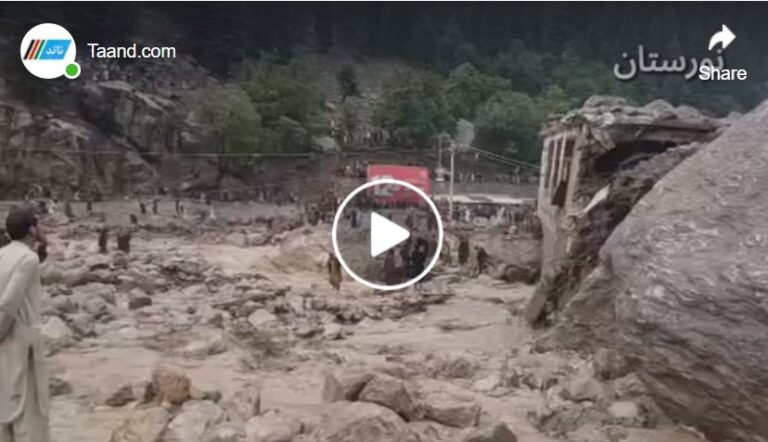
Until Islamabad stops relying on war by proxy, however, the long-term future of the region remains bleak, and the biggest fallouts from ongoing tensions will continue to be felt by the people living on both sides of the border. Not to mention, the considerable problems faced by both countries: climate disaster, floods, earthquakes, tanking economies, low life-expectancy, and war, will only be further exacerbated by their military obsessions.
Pakistan must stop behaving like Afghanistan is an extension of itself, only there to serve its needs. However, between the country’s continued slide into authoritarianism, and its leaders falling over themselves to flatter US President Trump despite the latter’s claim of wanting “Bagram back”, it feels like there is little hope for improvement. The tense regional relations fuelled by a decisively pro-war and anti-Pakistan, right-wing India, also don’t help matters.
For now, as tired and familiar structures are emboldened, the people of Afghanistan, Afghan refugees in Pakistan, and ordinary Pakistanis, especially Pashtuns, are sadly expected to continue to pay a heavy price.
Sanaa Alimia is an academic and the author of Refugee Cities.
Follow Sanaa on X: @SanaaAlimia
About the Author